
Key Features
- Ensures wishes are followed. Allows a trusted person (agent) to make healthcare decisions that align with your values.
- Protection from incapacitation. Lets an agent step in and make healthcare decisions if the principal cannot for themselves.
- Prevents family conflict. Selects one person to be solely responsible for making all medical decisions.
- Effective immediately. The agent can begin making decisions for the principal after signing it.
- Supplements other directives. Use with a living will or advance directive to complete an end-of-life plan.
By State
- Alabama
- Alaska
- Arizona
- Arkansas
- California
- Colorado
- Connecticut
- Delaware
- Florida
- Georgia
- Hawaii
- Idaho
- Illinois
- Indiana
- Iowa
- Kansas
- Kentucky
- Louisiana
- Maine
- Maryland
- Massachusetts
- Michigan
- Minnesota
- Mississippi
- Missouri
- Montana
- Nebraska
- Nevada
- New Hampshire
- New Jersey
- New Mexico
- New York
- North Carolina
- North Dakota
- Ohio
- Oklahoma
- Oregon
- Pennsylvania
- Rhode Island
- South Carolina
- South Dakota
- Tennessee
- Texas
- Utah
- Vermont
- Virginia
- Washington
- Washington D.C.
- West Virginia
- Wisconsin
- Wyoming
How to Get a Medical POA (4 steps)
1. Select an Agent

If a principal has the capacity to make decisions for themselves, they are legally able to appoint a health care agent.[1]
The agent selected will be responsible for making decisions based on the principal’s healthcare. Therefore, it’s recommended to select a trusted individual who is aware of the principal’s medical history (e.g., heart conditions, medication, allergies, etc.)
3. Attach a Living Will

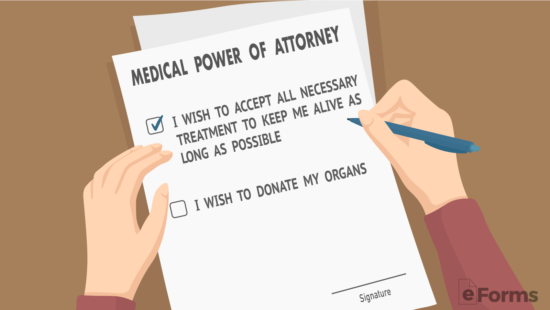
A living will is a legal document that outlines a person’s end-of-life treatment options. Specifically, if a patient becomes in a medical condition with no cure, it elects the decision to be made whether to not prolong their life.
A living will is recommended to be attached to any medical power of attorney created.
4. Sign and Complete

A medical power of attorney must be signed in accordance with state signing laws. This commonly includes witnesses and/or a notary public (see state laws).
When can an agent make medical decisions?
When is a patient determined to be incapacitated?
A patient can be determined to be incapacitated by:
- A physician
- A psychologist licensed in the state;
- An individual with training or expertise in the finding of lack of capacity who is licensed in the state as;
- A physician’s assistant;
- An advanced practice registered nurse; or
- A social worker.
- A responsible healthcare worker who is not described hereunder.[3]
Medical POA vs Living Will
Statutory Forms: By State
Signing Requirements: By State
Some states have limitations on who can be a witness for the principal. For example, in California, a witness cannot be:
- Related by blood, marriage, or adoption;
- Beneficiaries to the principal’s estate;
- The agent; or
- Any health care worker or medical staff providing care to the principal.
| STATE | SIGNING REQUIREMENTS | LAWS |
|---|---|---|
| Alabama | Two (2) Witnesses | § 22-8A-4(c)(4) |
| Alaska | Notary Public or Two (2) Witnesses | AS 13.52.010(b) |
| Arizona | Notary Public or One (1) Witness | § 36-3221(A)(3) |
| Arkansas | Notary Public or Two (2) Witnesses | § 20-6-103(c) |
| California | Notary Public or Two (2) Witnesses | § 4701(e) |
| Colorado | No law (Notary Public recommended) | |
| Connecticut | Two (2) Witnesses | § 19a-575 |
| Delaware | Two (2) Witnesses | § 2503(b)(1)(d) |
| Florida | Two (2) Witnesses | § 765.202(1) |
| Georgia | Two (2) Witnesses | § 31-32-5 |
| Hawaii | Notary Public and Two (2) Witnesses | § 327E-3(1) |
| Idaho | No law (Notary Public recommended) | § 39-4510 |
| Illinois | One (1) Witness | 755 ILCS 45/4-5.1 |
| Indiana | Notary Public or Two (2) Witnesses | IC § 16-36-7-28 |
| Iowa | Notary Public or Two (2) Witnesses | § 144B.3(b) |
| Kansas | Notary Public and Two (2) Witnesses | § 58-632 |
| Kentucky | Notary Public or Two (2) Witnesses | § 311.625(2) |
| Louisiana | Two (2) Witnesses | § 224 (A) |
| Maine | Two (2) Witnesses | § 5-803(2) |
| Maryland | Two (2) Witnesses | § 5–603 |
| Massachusetts | Two (2) Witnesses | § 201D-2 |
| Michigan | Two (2) Witnesses | § 700.5506(4) |
| Minnesota | Notary Public or Two (2) Witnesses | § 145C.03(5) |
| Mississippi | Notary Public or Two (2) Witnesses | § 41-41-205(2) |
| Missouri | Notary Public | § 404.705(3) |
| Montana | Two (2) Witnesses | § 50-9-103 |
| Nebraska | Notary Public or Two (2) Witnesses | § 30-3404(5) |
| Nevada | Notary Public or Two (2) Witnesses | NRS 162A.790 |
| New Hampshire | Notary Public or Two (2) Witnesses | § 137-J:14 |
| New Jersey | Notary Public or Two (2) Witnesses | § 26:2H-56 |
| New Mexico | Two (2) Witnesses | § 24-7A-4 |
| New York | Two (2) Witnesses | PBH § 2981(2) |
| North Carolina | Notary Public and Two (2) Witnesses | § 32A-16A(3) |
| North Dakota | Notary Public or Two (2) Witnesses | § 23-06.5-05(d) |
| Ohio | Notary Public or Two (2) Witnesses | § 1337.12(1)(b) |
| Oklahoma | Two (2) Witnesses | 63 O.S. § 3101.4(A) |
| Oregon | Notary Public or Two (2) Witnesses | § 127.515(2) |
| Pennsylvania | Two (2) Witnesses | § 5452(b)(2) |
| Rhode Island | Notary Public or Two (2) Witnesses | § 23-4.10-2(9) |
| South Carolina | Notary Public and Two (2) Witnesses | § 62-5-517 |
| South Dakota | Notary Public or Two (2) Witnesses | § 34-12D-2 |
| Tennessee | Notary Public or Two (2) Witnesses | § 34-6-203(a)(3) |
| Texas | Notary Public or Two (2) Witnesses | § 166.154 |
| Utah | One (1) Witness | § 75-2a-107(c) |
| Vermont | Two (2) Witnesses | § 9703(b) |
| Virginia | Two (2) Witnesses | § 54.1-2983 |
| Washington | Notary Public or Two (2) Witnesses | § 70.122.030 |
| West Virginia | Notary Public and Two (2) Witnesses | § 16-30-4(a) |
| Wisconsin | Two (2) Witnesses | § 155.10(1)(c) |
| Wyoming | Notary Public or Two (2) Witnesses |