
Key Features
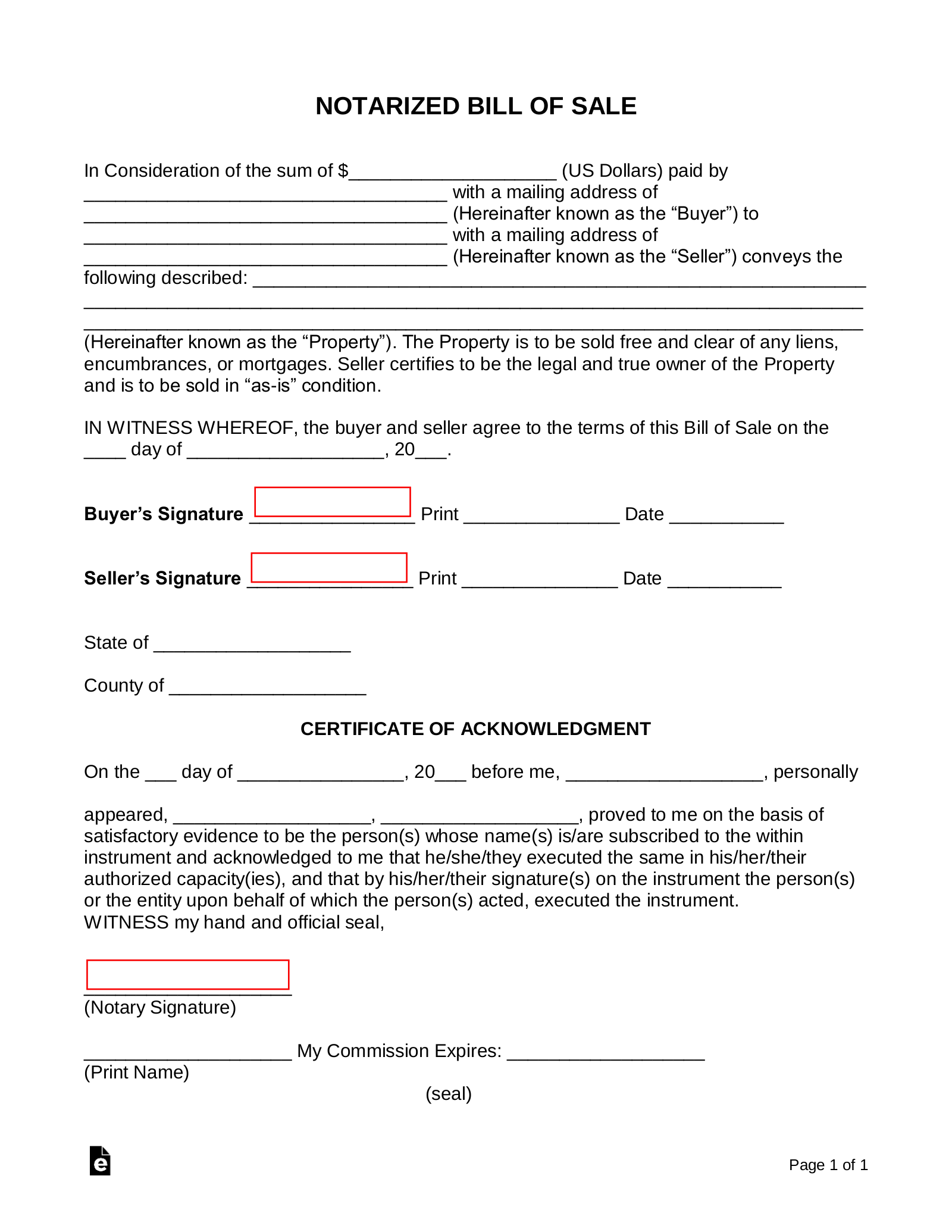
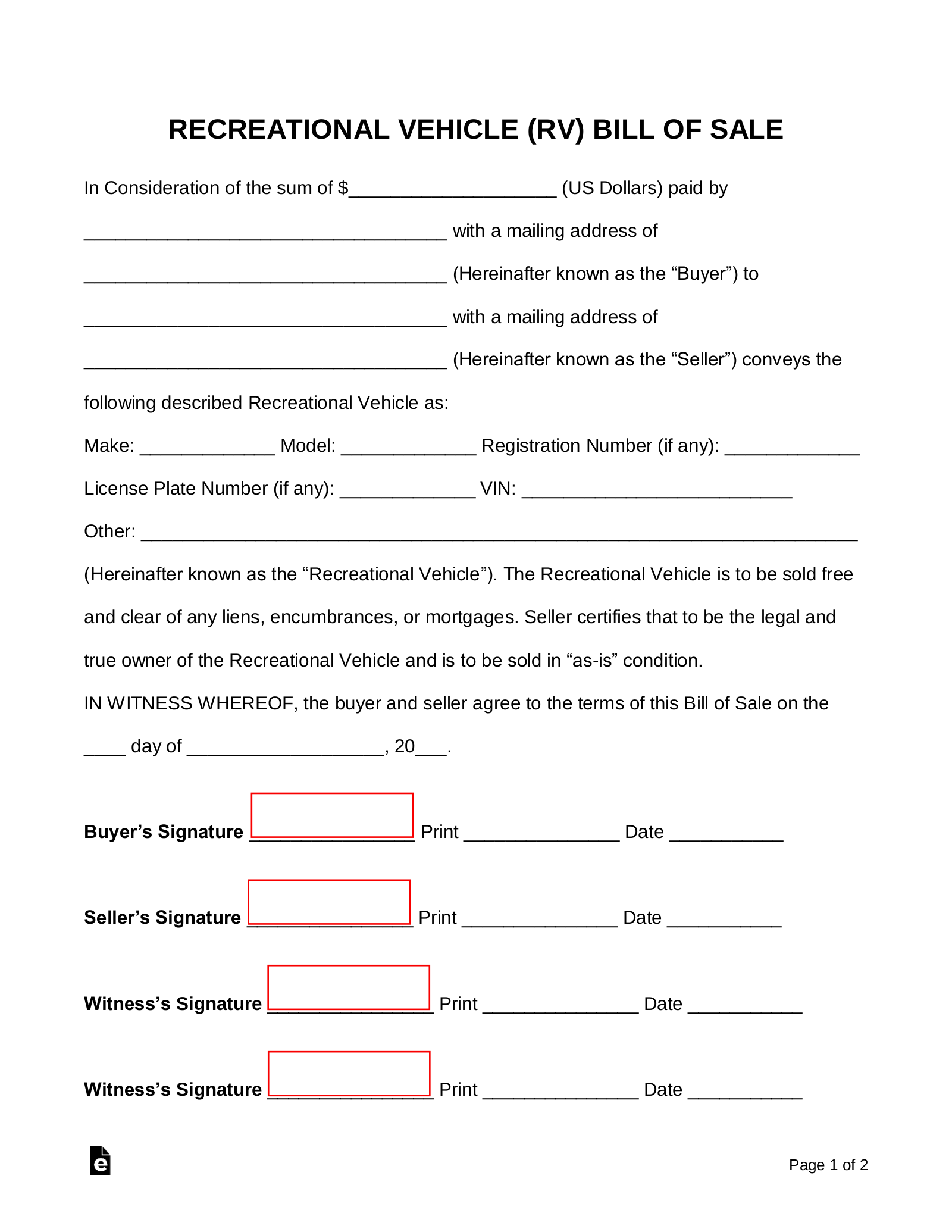
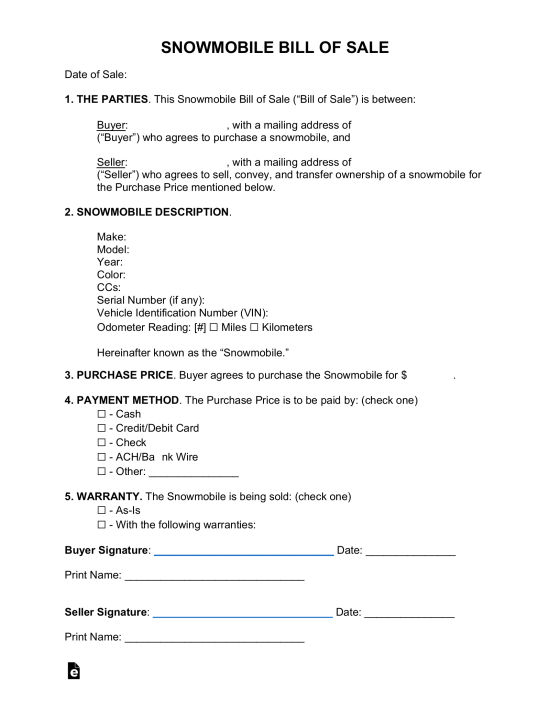
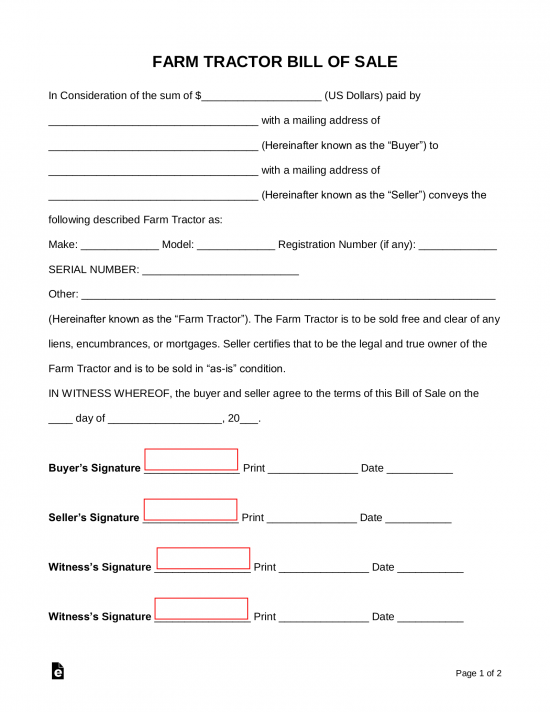
- Proof of transaction. Helps to prevent future disputes by documenting that a transaction occurred between buyer and seller.
- Offers warranties. Mentions whether the seller guarantees the item’s condition or if it is being sold on an “as-is” basis.
- Registration requirements. If applicable, such as when registering a vehicle or boat with a local DMV office.
By State
- Alabama
- Alaska
- Arizona
- Arkansas
- California
- Colorado
- Connecticut
- Delaware
- Florida
- Georgia
- Hawaii
- Idaho
- Illinois
- Indiana
- Iowa
- Kansas
- Kentucky
- Louisiana
- Maine
- Maryland
- Massachusetts
- Michigan
- Minnesota
- Mississippi
- Missouri
- Montana
- Nebraska
- Nevada
- New Hampshire
- New Jersey
- New Mexico
- New York
- North Carolina
- North Dakota
- Ohio
- Oklahoma
- Oregon
- Pennsylvania
- Rhode Island
- South Carolina
- South Dakota
- Tennessee
- Texas
- Utah
- Vermont
- Virginia
- Washington
- Washington D.C.
- West Virginia
- Wisconsin
- Wyoming
By Type (25)
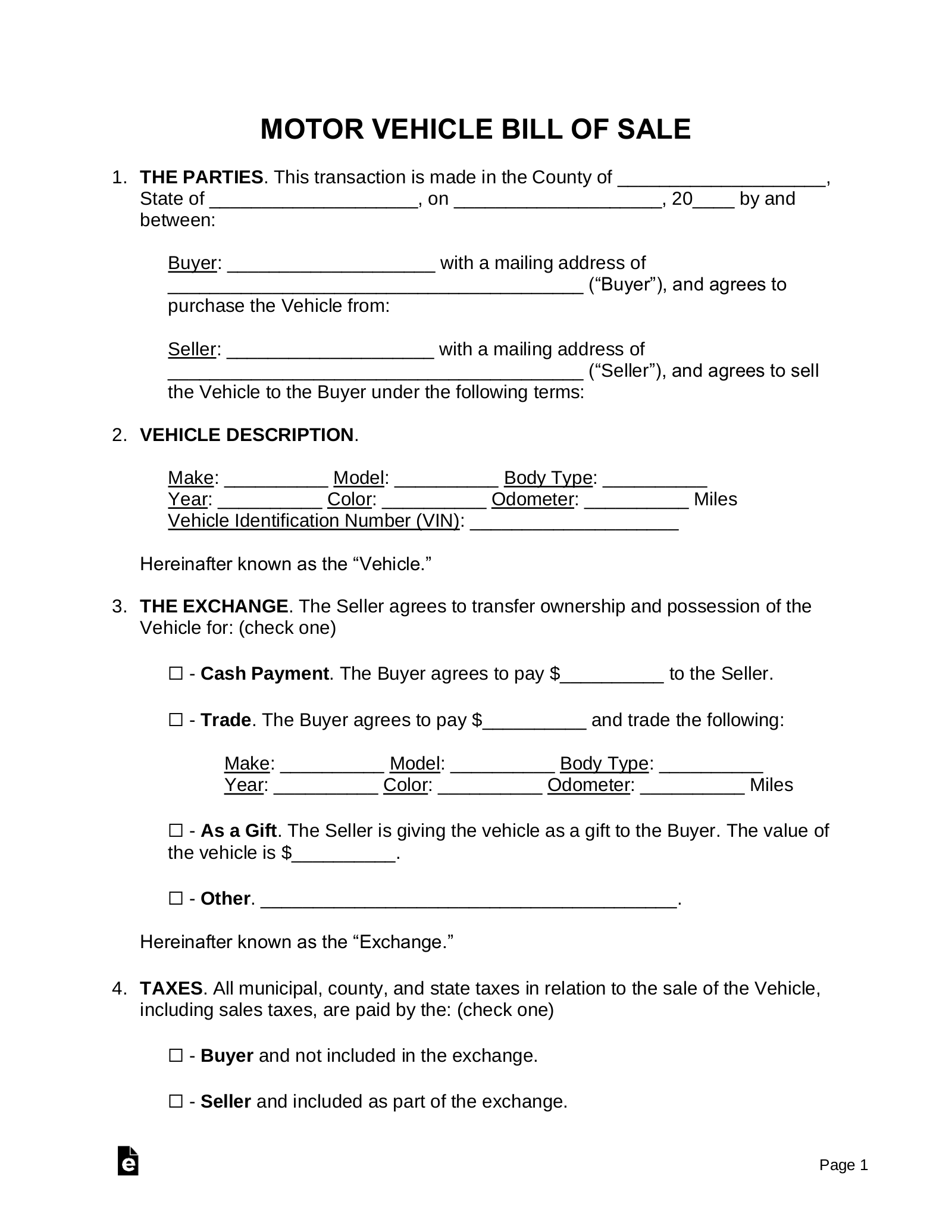
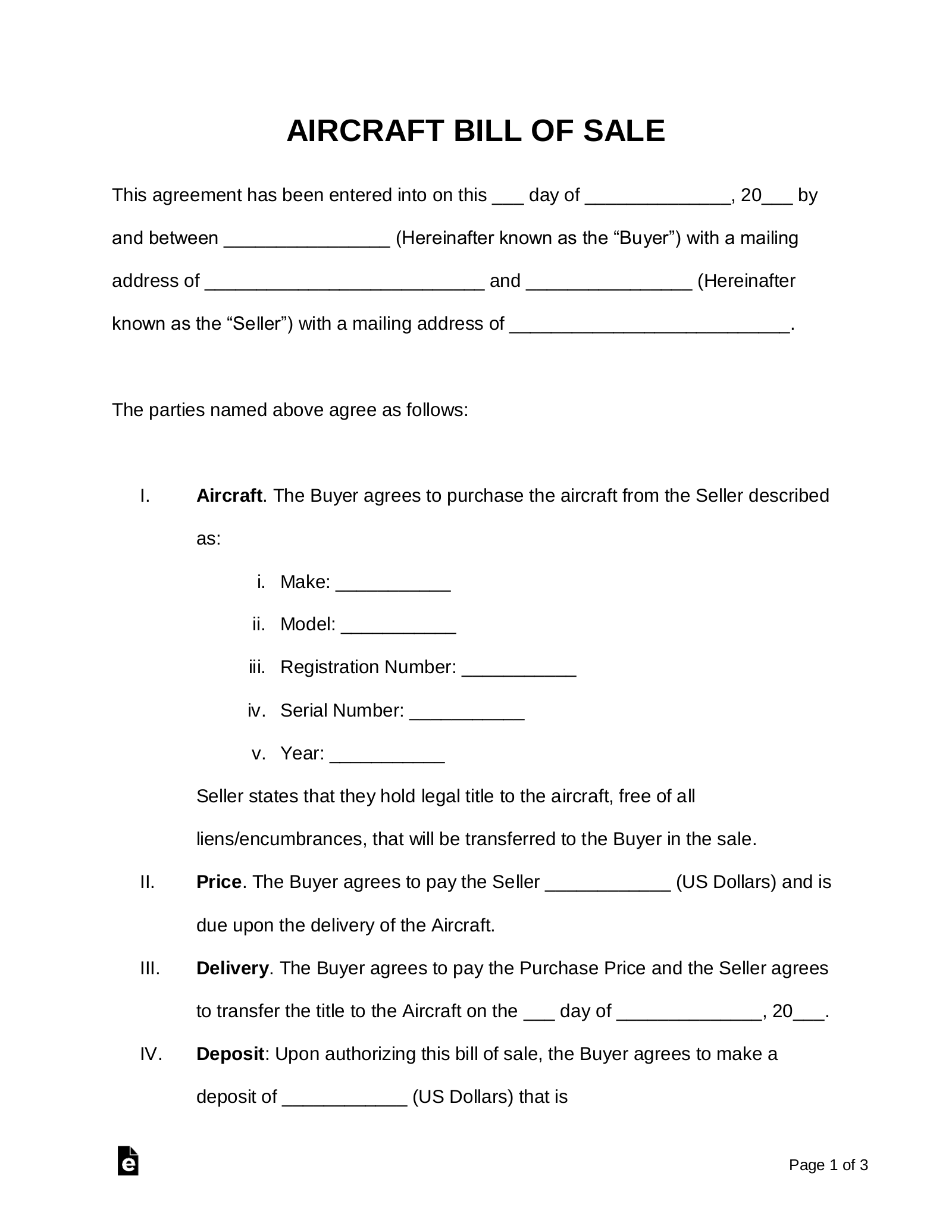
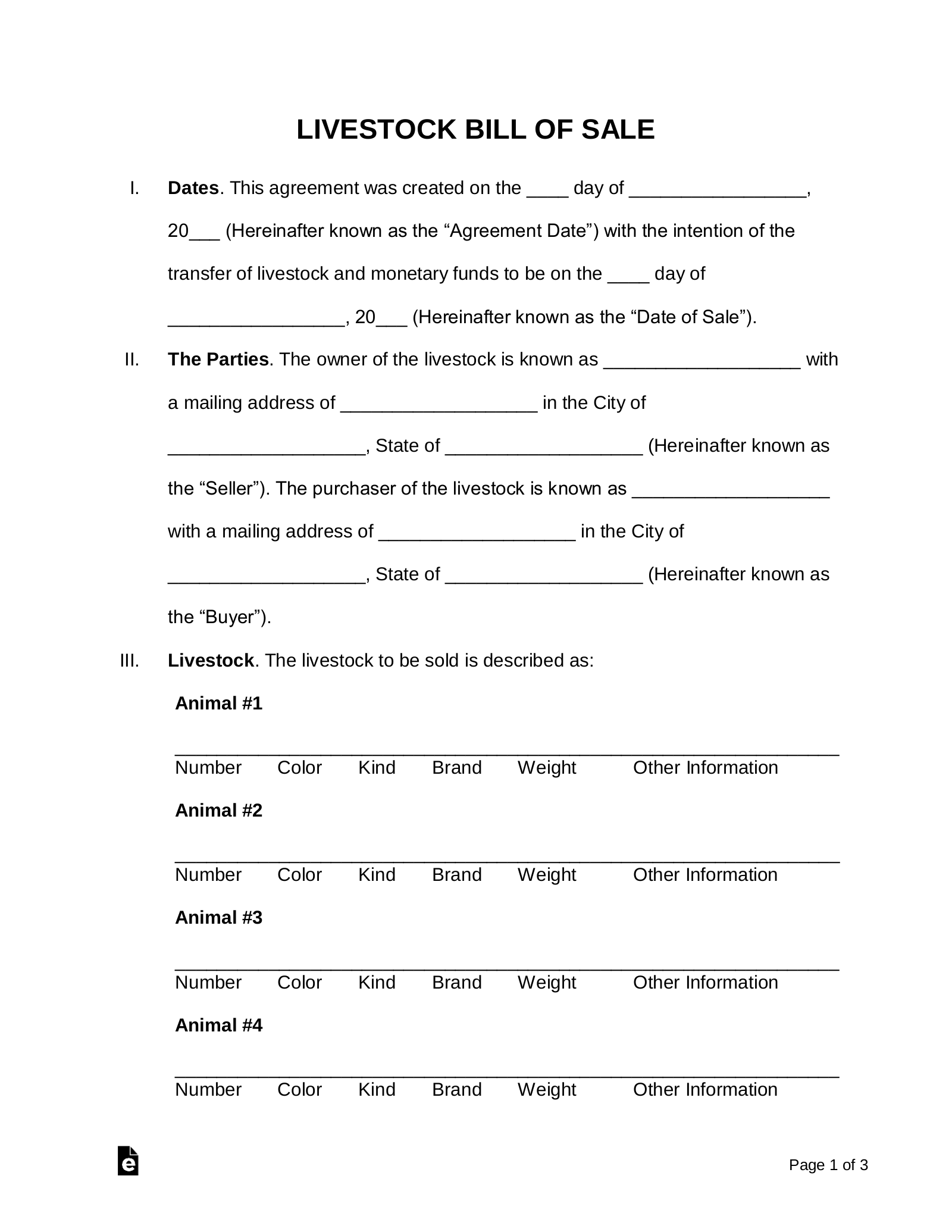
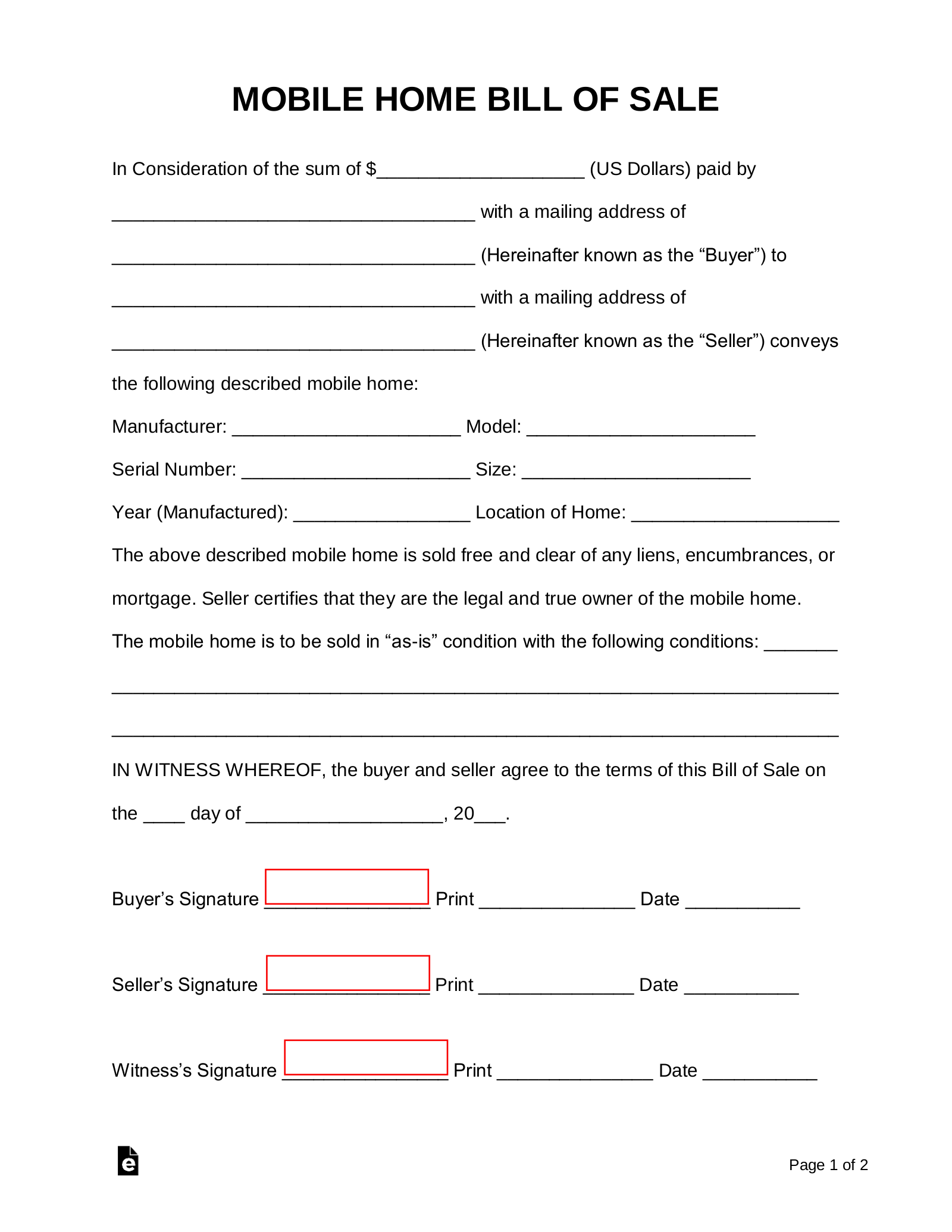
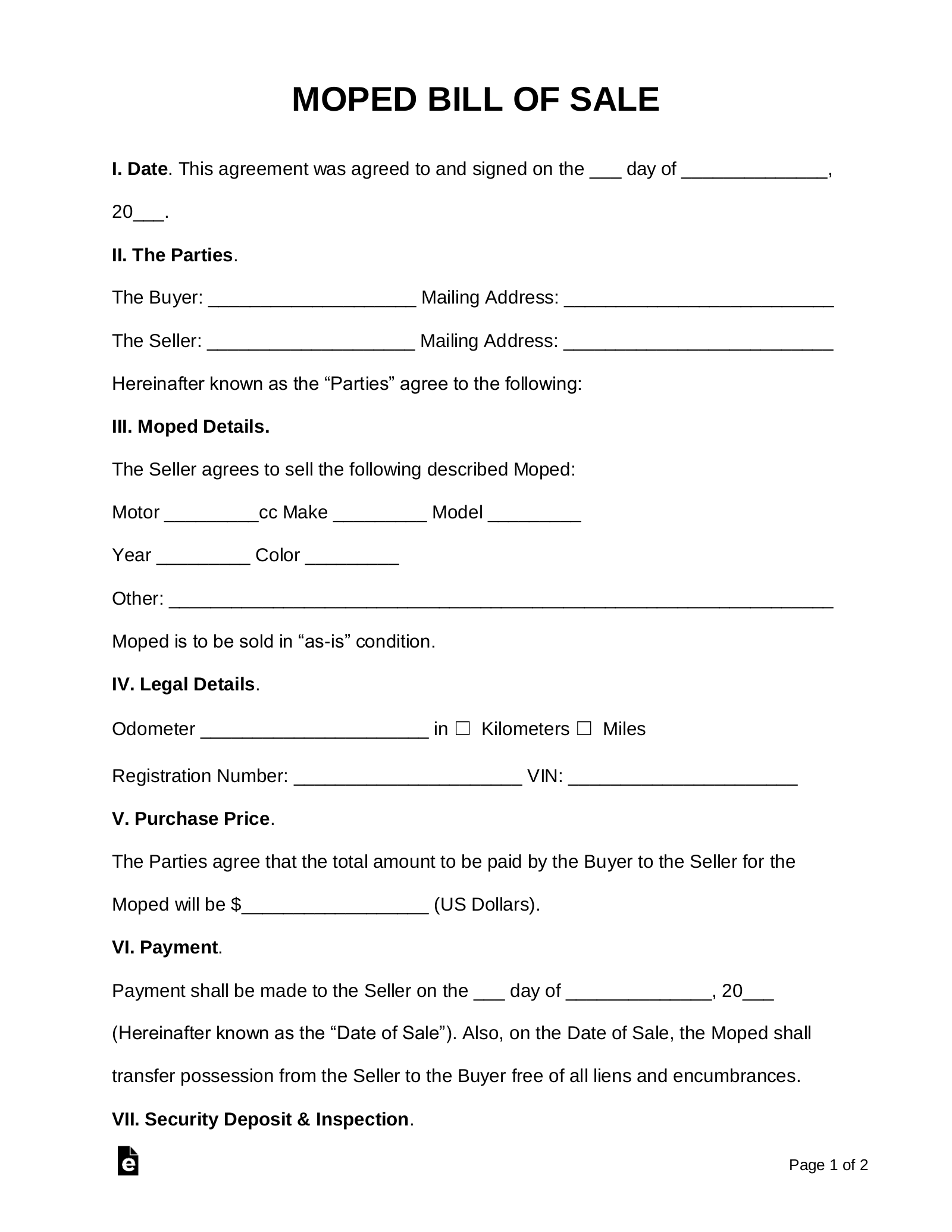
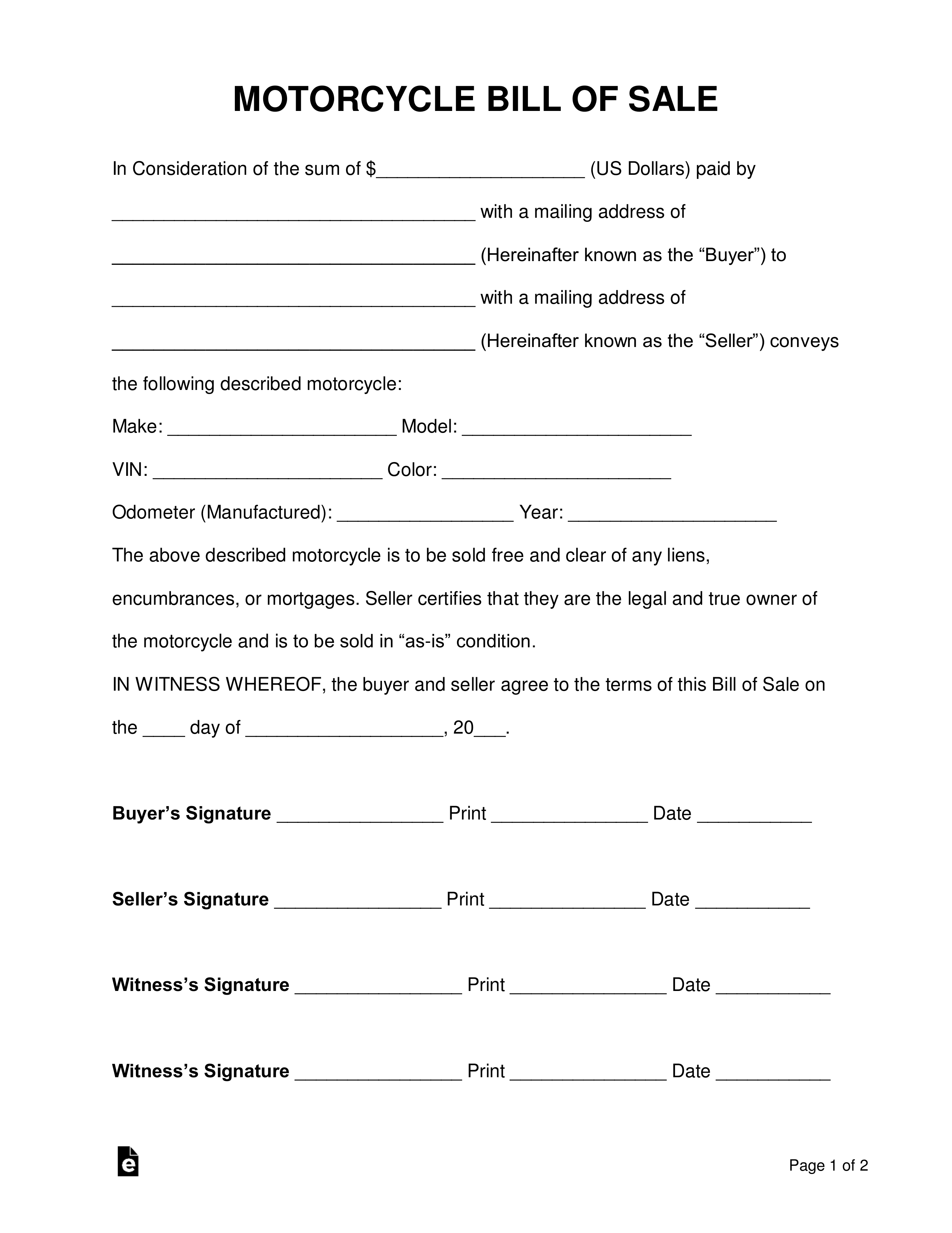
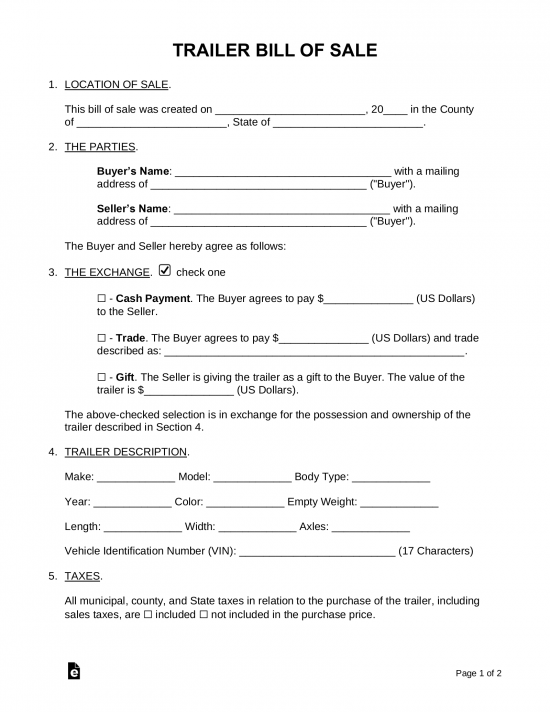
How to Sell a Vehicle (5 steps)
1. Get a Vehicle History Report
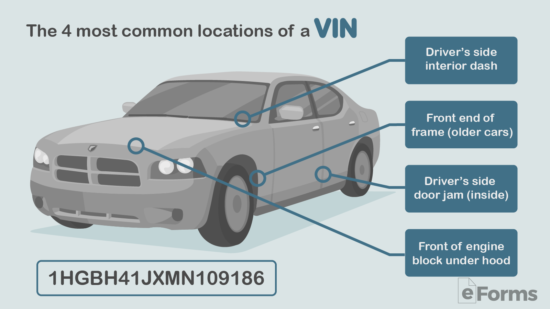
The seller should present the vehicle’s accident history. If not, the buyer can purchase this service using CarFax.
While there are no specific rules or laws on what gets reported on a vehicle’s history report, a repair will commonly be recorded if an insurance claim is made.
Vehicle Inspection
A prospective buyer may still request to have the vehicle inspected by a 3rd party mechanic to confirm the vehicle’s condition.
2. Gather Vehicle Documents

The seller will need to prepare the following documentation to sell the vehicle:
Required Documents
- Vehicle Title – The seller’s name should appear as the current owner.
- Odometer Disclosure – Required for vehicles that are model year 2011 and newer. Vehicles with a GVWR of more than 16,000 lbs are exempt.
Optional Documents
- Lien Release – If an auto loan was recently paid off.
- Service Records – For any repairs or invoices paid for vehicle modifications.
- Vehicle Power of Attorney – If someone is selling a vehicle on the owner’s behalf.

4. Complete the Sale

The sale is finalized when both parties have completed the following:
- Bill of Sale – Each party has a signed bill of sale.
- Odometer Disclosure Statement – Signed by the seller and given to the buyer.
- Payment Made – When the funds have been verified and sent to the seller.
- Vehicle Title – When the title has been signed over by the seller to the buyer.
- Sales Tax Paid – The buyer usually pays sales tax at the time of registration.
5. Post-Sale Requirements
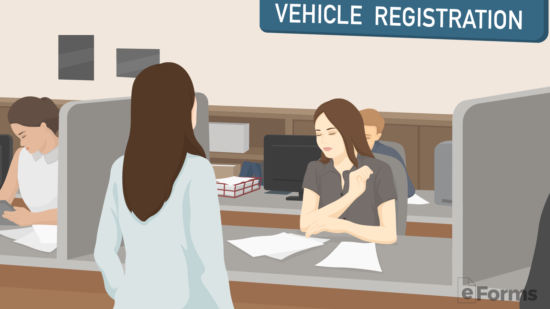
Seller’s Requirements
- Sales Tax – Sales tax is paid by the seller at the time of registration.
- Notice of Transfer – States such as California and Texas require the seller to notify the DMV when a vehicle is sold.
Buyer’s Requirements (registration)
- Bill of Sale
- Driver’s License
- Odometer Disclosure Statement
- Proof of Insurance
- Registration Fees
- Sales Tax (if applicable)
- Vehicle/Emissions Inspection (if applicable)
DMV Offices: By State
IMPORTANT: A bill of sale does not transfer the vehicle’s ownership. It only shows proof that a transaction took place. The seller must sign over the Certificate of Title to transfer ownership.